The repair methods, in plain language
The engineering standard OKC engineers follow (the ASCE residential-foundations guidelines) sorts repair into a short, neutral list. Learn the list once and you can read any quote, because whatever a company calls its product, it is doing one of these things.
| Method | What it does | Typical cost (US) |
|---|---|---|
| Underpinning (piers) | Drives supports down to firmer soil or rock and shifts the house's weight onto them. The pier types differ (see below). | $1,000 - $3,000 per pier |
| Grouting | Pumps grout under the slab to fill voids and give it continuous support, without much lifting. | Varies by scope |
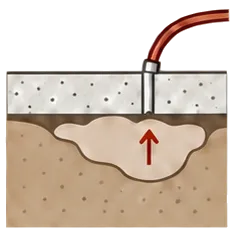
| Mudjacking | Pumps a slurry under the slab to adjust its elevation back toward level. | $500 - $1,900 |
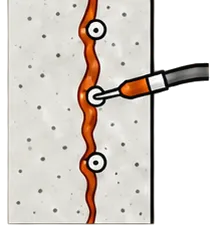
| Crack injection | Seals a cracked slab or wall with epoxy or polyurethane. It repairs the crack, not the movement that opened it. | $200 - $1,000 |
| Tendon stressing | Re-tensions the steel cables inside a post-tensioned slab. | Varies by scope |
| Partial demolition and reconstruction | Removes and rebuilds a section of the foundation. | Varies by scope |
The Typical cost column shows national US ranges (Fixr and This Old House, 2026), not OKC quotes - ballparks to size a method, not a bid. The dated OKC numbers by method are in the cost guide, and national and OKC figures can run higher or lower by method. Grouting, tendon stressing, and rebuilding a section are priced case by case, so no single range fits.
Grouting and mudjacking sound alike but do different jobs: grouting supports the slab without appreciable lifting, mudjacking adjusts its elevation. The standard warns that neither belongs under an already-underpinned slab if the soil there could still swell enough to damage the house.
| Method | What it does |
|---|---|
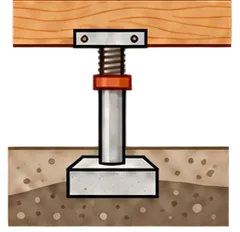
| Shimming the framing | Hardwood or steel shims set on top of the existing pier caps bring the floor framing back to level. |
| Repairing or reinforcing framing | Rotten or overloaded beams and joists are repaired or replaced, usually with treated lumber. |
| Adding supports | Compatible new piers or posts are added where the original spacing was too wide. |
| Re-establishing void spaces | The designed gaps that let the structure move without cracking are restored. |
| Crawl-space moisture control | Cross ventilation, under-floor drainage, and ground clearance keep the crawl space dry, the thing that undoes many pier-and-beam repairs. |
Slab vs pier and beam: 2 different fixes
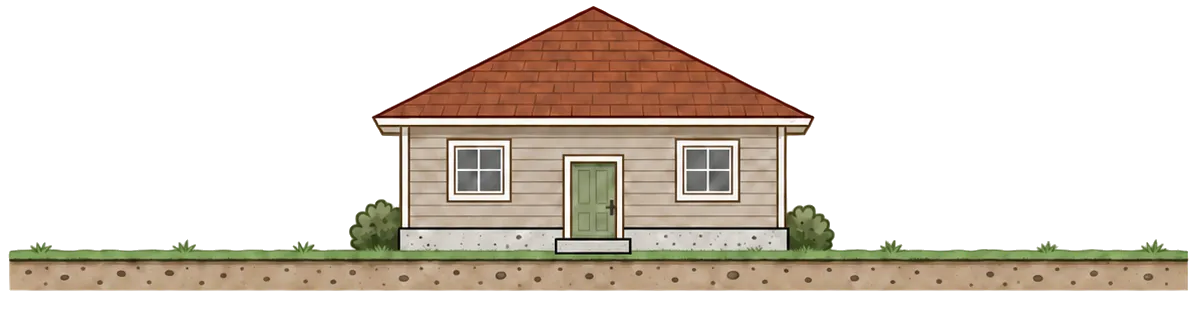
The first thing an honest quote settles is which kind of foundation you have, because the two are repaired from the two different menus above. A slab sits on the ground; a pier-and-beam house sits on posts over a crawl space. Mixing up the two, or pricing one as if it were the other, is the fastest way to get a quote that does not match the house.
Price follows the method and the scope, not the label. Piers are priced each - about $1,000 apiece in OKC homeowner reports Power lift was about $1000 per pier for ones we had done recently. Our structural engineer gave us a list of a few he recommended and they were more competitive than ram jackSource ↗ - so a slab that needs a few piers can cost less than a pier-and-beam house that needs many, and the reverse happens just as often. One Apr 2024 OKC pier-and-beam job ran $12,000 - $20,000 for 7 hydraulic lifts plus 12 interior screw jacks, with a $5,000 - $7,000 contingency just for crawl-space digging and ductwork. Bought a house back in late September and after those couple little earthquakes, realized some cracking was happening that seems to have been previously patched. Did have a structural engineer during the buying process who recommended some eventual repairs. Pier and beam crawl space home. Had ramjack come out with an initial quote or $12-20k. [...]Source ↗ That contingency is a pier-and-beam cost a slab would never have.
The takeaway for comparing quotes: make sure both bids assume the same foundation type and the same scope. An engineer's report settles that before a salesperson does. Full price picture in the OKC cost guide.
Piers: push, helical, and drilled
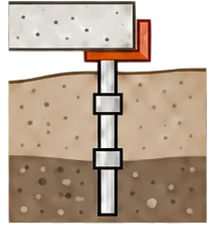
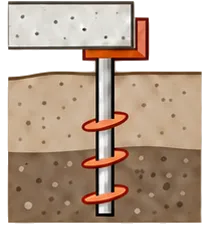
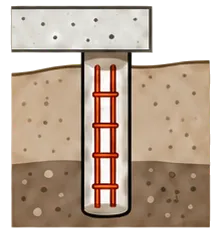
"Pier" is not one thing. Underpinning uses several pier types, and the difference is how they get into the ground and what holds them there. None is universally best; each has its own way of going wrong (that is the next section).
Sections of pile are hydraulically pushed down using the weight of the house. The cheapest common type, and the one most often quoted in OKC. They must be shimmed right after driving or they can spring back.
Steel pipe pushed or driven in sections. Depth below the moving soil is what matters, not the steel itself.
Screwed in like a giant screw to a target torque and depth. The torque and depth records are the checkable proof the pier reached stable ground.
Concrete poured into a drilled shaft, or a widened footing. Used where a deep, poured support suits the soil and access.
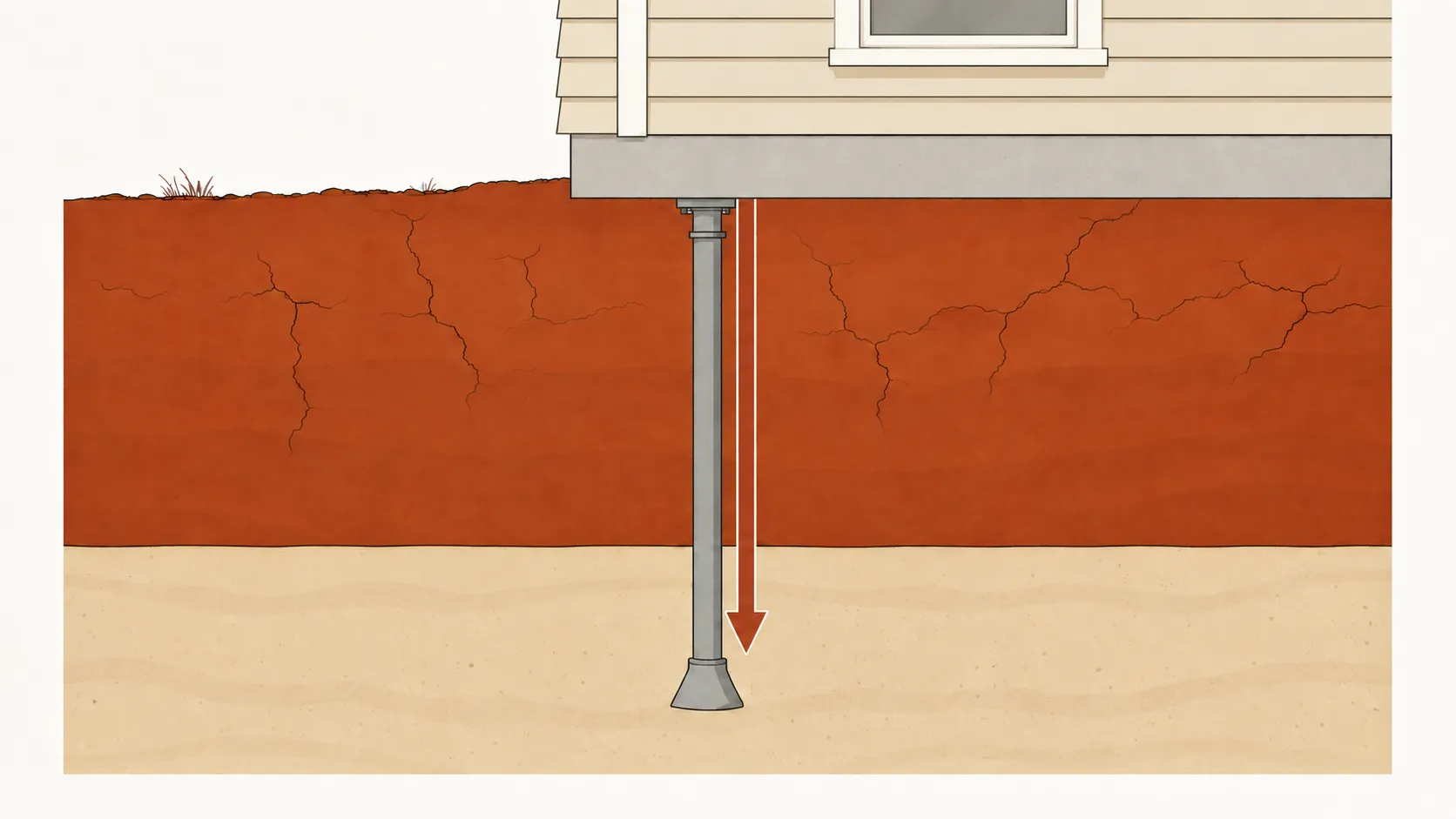 House loadActive clay (moves with the seasons)Repair pierStable soil
How a repair pier reaches past the clay that moves and carries the house's weight down to firmer ground. Illustration, not a photo.
2 things piers will not do, straight from the standard. Underpinning does not improve the parts of the foundation that were not piered - and the engineering standard says the paperwork should state that plainly. And adjusting a foundation's elevation is unlikely to produce a truly level floor. A quote that promises a perfectly level house is promising something the standard says repairs do not deliver.
Piers address settlement, not heave. Piers and pilings will not stop a foundation from being pushed up by swelling soil unless they are specifically designed for it, and common repair piers are not. That matters in central Oklahoma, where the same clay drops in a drought and swells after rain. If your house is heaving, more piers is not automatically the answer - which is why the diagnosis comes first.
Mudjacking and foam: leveling, not stabilizing
Mudjacking (a cement-and-soil slurry) and polyurethane foam both lift a settled slab by pumping material underneath it. They can be the right, economical call for a slab that has stopped moving. What they are not is a way to stop the ground from moving again.
These are shallow repairs, so they sit in the same active soil that moved the slab in the first place. If the moisture changes again, the slab can move again. Two other risks the repair committee names: over-injection can bulge or crack the slab it is meant to fix, and the grout or foam can get into cracked utility lines running under the slab. On central Oklahoma's active clay, the engineering standard's instinct is to manage the water first - so the useful question to a leveling contractor is what is being done about drainage, not just about lift.
How each method can fail
Every repair system has a published list of ways it can go wrong. The foundation-repair engineering committee wrote one for each. A company that sells only piers will not hand you the pier failure list; here it is anyway, because knowing it is how you ask the right questions.
If water is not managed under and around the foundation, even a correctly repaired slab can keep moving. Poor drainage undermines every method on this page.
Spring-back if not shimmed immediately; shallow piles above the active soil settle with the seasons; a drought can release their grip at shallow depth; roots or rocks can push a segment off-vertical.
Spacing them too far apart overloads each one; an off-angle install can lean under load; not reaching the proper torque and depth leaves the pier in soil that still moves.
Shallow, so they move again if the soil moisture changes; over-injection can bulge or crack the slab; material can enter cracked utility lines.
Ordinary repair piers stop a house from sinking, not from being pushed up by swelling soil - unless they were designed to, and most are not.
These are maintenance, and the standard says they "should not be considered a repair." Useful alongside a fix, not a substitute for one.
The thread through all of it: the repair committee says a repair's success or failure is governed by the experience of the engineer and installer, the quality control during the work, and your own maintenance afterward - not by which product went in. Vet the people and the paperwork, not the brand.
When the cheapest fix is no structural fix
Before you sign for piers, know that the engineers who write the repair standard say the smartest first move is sometimes not a structural repair at all.
The standard calls it prudent to try non-structural measures first - fixing drainage, managing watering, dealing with the trees - and to watch how the foundation behaves, before or instead of structural repair. It also says an owner may reasonably choose periodic cosmetic repairs and door adjustments over comprehensive underpinning. In plain terms: a crack is not automatically a $20,000 job, and the people who set the standard say so.
And a limit worth hearing before you buy: "Perfection is not attainable by remedial measures." A good repair plan states what it is meant to accomplish and where it stops. Anyone promising a like-new, perfectly level house is selling past what the standard says any method can do.
◆ Before you take a free inspection
Get the scope before the sales pitch
The method should be chosen by someone who does not sell it.
An independent structural engineer's report runs $200 - $500 and names the problem, the method, and the extent - measured against published standards, not shaped by a repair sale. For a big or comprehensive job, the standard says the soil information should come from a boring on your lot, not from local rule of thumb. Walk into every free inspection already knowing what your house needs.
Read the engineer-first guide →Know the method you need? 1 OKC contractor, not 5.
Free to you. The contractor pays us a referral fee, never a markup.
FAQ
Are steel piers better than concrete?
There is no method that is best for every house. The engineering repair committee is blunt about this: a repair's success is governed by the experience of the engineer and installer, the quality control during the work, and your own drainage and moisture maintenance afterward, not by which product is under your house. Every pier system - pushed piles, steel pipe piles, helical piers, drilled piers - has its own published list of ways it can fail. So the useful question is not which brand, but whether this contractor can show the install records that prove the piers reached the right depth and torque.
Do piers fix a foundation that is heaving?
Not by themselves. Piers and pilings will not stop a foundation from being pushed up by swelling soil unless they are specifically designed to, and the repair piers most commonly used on houses are not. Piers address settlement, where the ground drops away. Oklahoma's clay does both - it drops in a drought and swells after rain - so ask the engineer which one your house is doing before anyone drives a pier for it.
Is mudjacking a permanent fix?
Mudjacking and foam are leveling fixes, not stabilizing ones. They are shallow, so they sit in the same active soil that moved the slab in the first place, and if the moisture changes again the slab can move again. They also carry their own risks: over-injection can bulge or crack the slab, and the material can get into cracked utility lines under it. They can be the right call for a slab that has stopped moving, but on active clay the engineering standard is to manage the water first. Ask what is being done about drainage, not just leveling.
Slab vs pier & beam - which is pricier?
Neither is reliably pricier - the cost tracks the repair method and how much of it you need, not the foundation type. Piers are priced each (about $1,000 per pier in OKC homeowner reports), so a slab that needs a few piers can cost less than a pier-and-beam house that needs many, and the reverse is just as common. The two are also repaired from different menus: a slab might be underpinned, grouted, mudjacked, or crack-injected, while a pier-and-beam house gets shims, framing repairs, added supports, and crawl-space moisture control. Get an engineer's scope before you compare two quotes, so you know both are pricing the same work.